Science myths are everywhere! This Science Literacy Week, we’re sharing a few of our least favourite myths and the truth behind them. Plus, learn how to debunk misconceptions like these.
Myth: hibernation is a big, season-long nap.

Fact: Hibernation isn’t actually sleep. Many animals who hibernate go through different physiological changes and to different degrees. Even those animals who do enter a sleep-like state (called torpor) don’t remain that way for more than 30 days. So, hibernation is not a nap, and animals don’t tend to spend the entire winter season in hibernation.
Myth: Different parts of your tongue are responsible for different tastes.
Fact: Taste buds that identify each of the five tastes are found all over the tongue. Taste buds are also found in other parts of your mouth, including on the roof of your mouth and in your throat. It’s true that different parts of the tongue can be more slightly sensitive to one taste over another, but the initial studies that discovered this didn’t even test for umami!

Myth: Chickens are the closest living relative to the T. Rex.

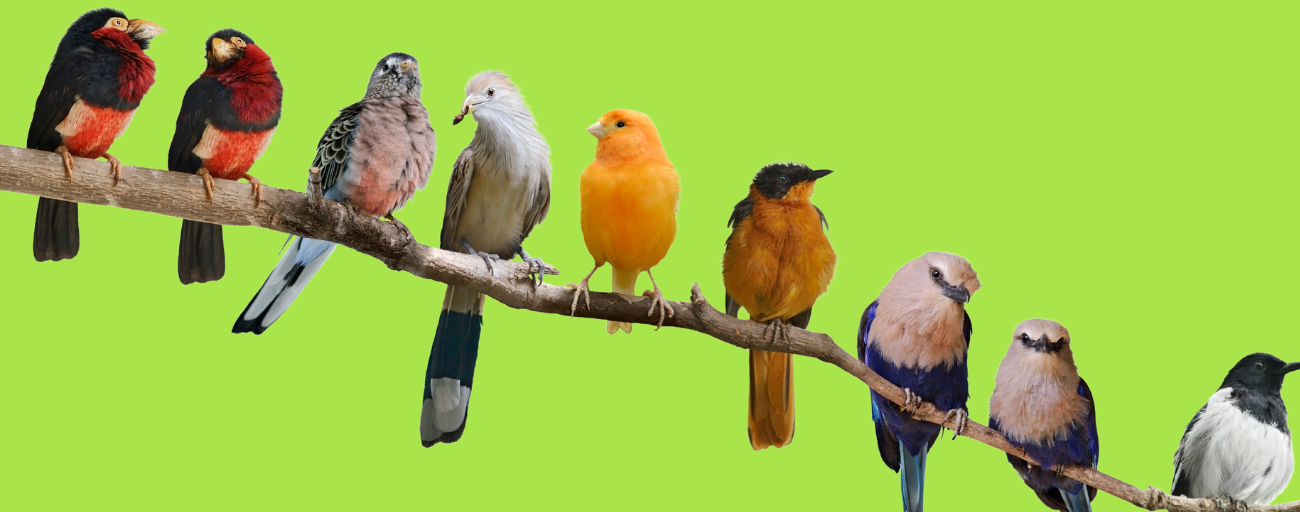
Fact: All birds are the descendants of avian dinosaurs, not just chickens. This ‘fact’ is not unique to chickens because evolution is not linear, though often it’s often depicted that way! When we think about a common ancestor for birds, they actually trace to an animal from well before the time of the Tyrannosaurus rex. They likely come from a group of theropod dinosaurs in the Jurassic period.
Myth: Gum will stay in your digestive system for 7 years if you swallow it.
Fact: Gum is made of digestible material, it doesn’t stick around any longer than other food. Nobody really knows where this myth originated, but it sure has been sticky! Some parts of food, like fiber, can’t be digested and pass through our system, but gum rarely contains any of these ingredients and they don’t take 7 years to pass.

Myth: Goldenrod causes hay fever.
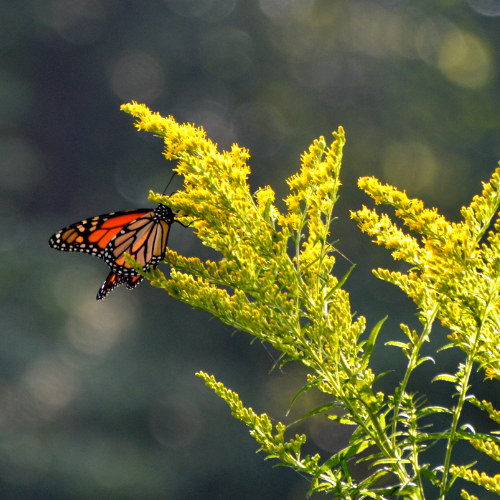
Fact: Goldenrod is not the source of airborne allergies. Goldenrod’s heavy, sticky pollen is not airborne therefore can’t float into noses. Ragweed on the other hand releases a lot of pollen into the air, and it happens to bloom at around the same time as goldenrod (and often in the same places).
How to Debunk Common Science Myths
So, we’ve busted some myths. But how did we do it?
Search terms
What is the core of what you’re looking for? For example, for the hibernation myth our key terms were ‘hibernation’, ‘sleep’, and ‘myth’ as we conducted our search.
Also, you can use + and – signs to filter your search. Quotation marks (“”) can be used too, for exact wordings/names instead of getting things that are close. Fewer, more accurate results are often better than lots of unhelpful ones.
Trusting a source
Once we get some initial results, we need to go beyond the summary and dig into the articles that the summary cited. We need to find out what they actually say: often you’ll at least find more detail, but sometimes you’ll find information that may contradict the search engine summary because the information was summarized incorrectly.
Following the information – the source’s sources
Even if you find results that you think seem reliable on the surface, it’s worth asking some critical questions:
Does the source cite real science, or other blogs or news items? If it only cites other places that are rewriting the same idea, it’s time to try to find an alternative that gets closer to a real scientific study or principle.
Where did the original information come from (are the source’s sources reliable)? If you follow the trail of sources back to a first-hand source, you can sometimes find out if a claim is based in science, personal experience, or unfounded.
How old is the source? If the source is dated, we may need to go back and add a new search term to ensure we’re looking at the most recent information.
Re-writing in your own words
Being able to synthesize information, summarize, and explain means you understood it AND illustrates what you might not understand. Try writing out what you’ve read and understood after minimizing your search, then check it against at least two sources. What did you remember? What did you leave out?
Citing your sources
Throughout this blog, we’ve linked our sources so that you can evaluate for yourself whether they are of good quality. Sharing sources helps others make their own judgement about facts, including whether they might cite you when sharing facts with others! So, when you share your own telling of your fun fact, you can cite your own sources and join the ecosystem of well researched facts.
Being open to new information
Finally, the most important factor is being open to new information. Each step in this process should be part of a cycle, rather than opposite ends of a process. New information is being discovered all the time, so being open to changing your understanding of a concept or fact is just as important as learning it in the first place.
Further Learning
- Unleash your curiosity with excellent STEM materials from Science Literacy Week by CASC.
- Spotlight with Scientists in School is a powerful and engaging original interview series. Our playlist highlights 40 stories from across the globe to inspire the next generation of scientists. The series shines a spotlight on diverse STEM professionals and role models that are relatable, successful, and look just like the children and youth watching them. Interviewees include amazing STEM experts from a beluga whale snot collector in Churchill, Manitoba to an NFL player turned Mathematician and so many more!
Scientists in School is a Canadian science outreach charity dedicated to sparking children’s interest in STEM through hands-on discovery.
Our online workshops are available across Canada in English and French and encourage children to discover how science is used in their everyday world. We provide rich, engaging and investigative experiences with plentiful opportunities for youth to interact with the visiting scientist guiding the workshop.
Explore our workshops and help us turn your young learners into young scientists!